


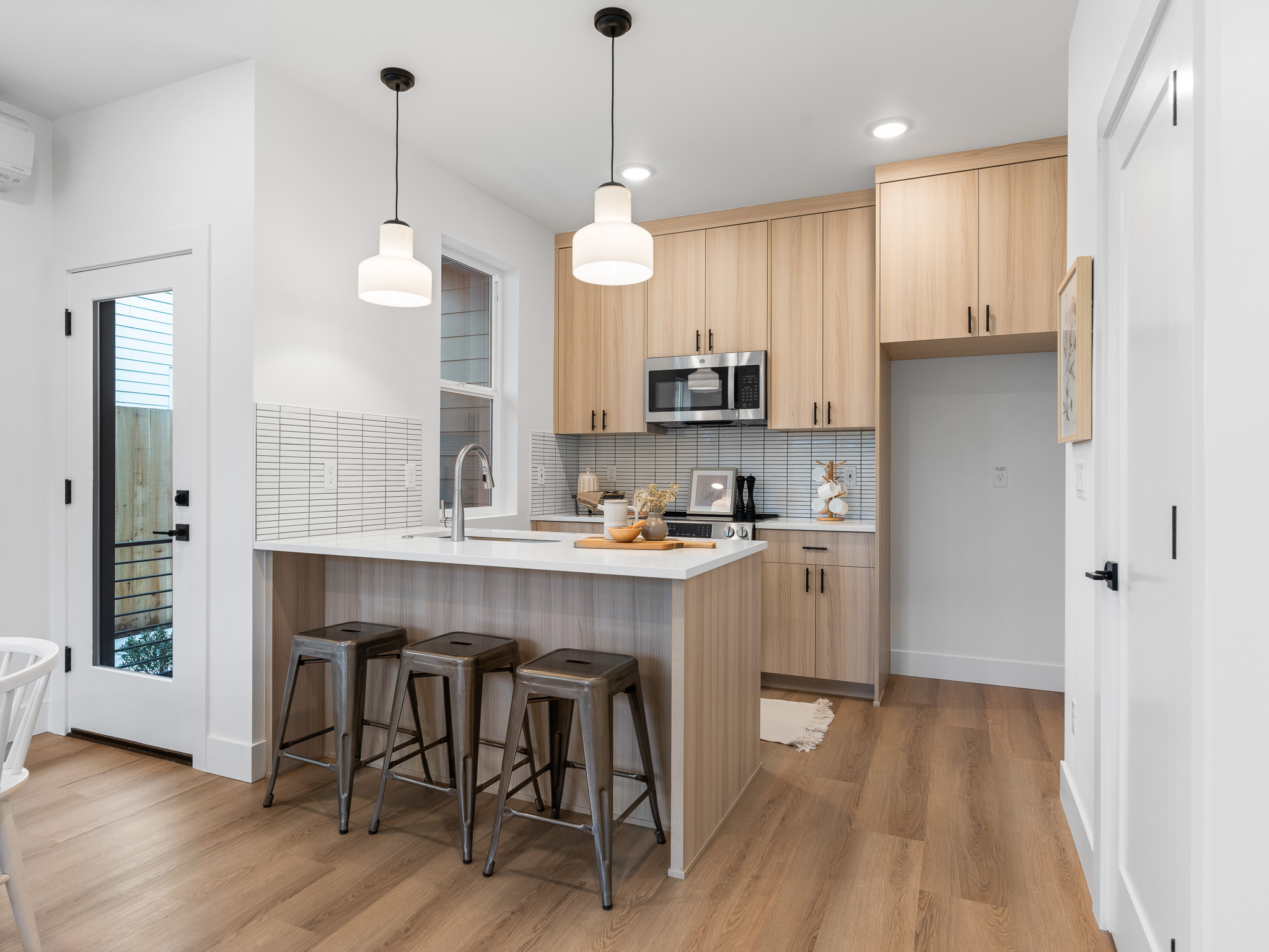
Small homes don’t have to feel cramped. With the right design strategies—thoughtful layout, layered lighting, clever storage, and material cohesion—compact spaces can live large. Here’s how Aker Development makes small homes feel spacious and expansive, bright, and functional in Portland’s urban infill projects. By implementing techniques that ensure each design element contributes to a small home feel spacious, Aker transforms the ordinary into the extraordinary.
Introduction
In Portland’s ever-tightening urban fabric, small homes are not just a trend—they’re a necessity. As lots shrink and density increases, livability can’t be sacrificed. Aker Development has leaned into the challenge, crafting compact homes that still feel light, open, and welcoming.
In our experience, achieving a small home feel spacious is paramount for maximizing livability in urban environments.
We believe that every design choice should enhance how a small home feel spacious, allowing residents to thrive even in limited dimensions.
This blog explores the key design choices that make a small home feel spacious—choices that go far beyond square footage. These strategies are evident in many of Aker’s cottage communities and infill developments across the city, where smart design makes the most of every inch.
When designed thoughtfully, a small home feel spacious can redefine daily living, turning constraints into creative opportunities.
This approach ensures that every square foot enhances the small home feel spacious, enabling fluidity between spaces.
Layout is Everything
A spacious feeling starts with how a home is laid out. Rather than relying on sheer size, Aker prioritizes open floor plans that enhance flow and reduce wasted space.
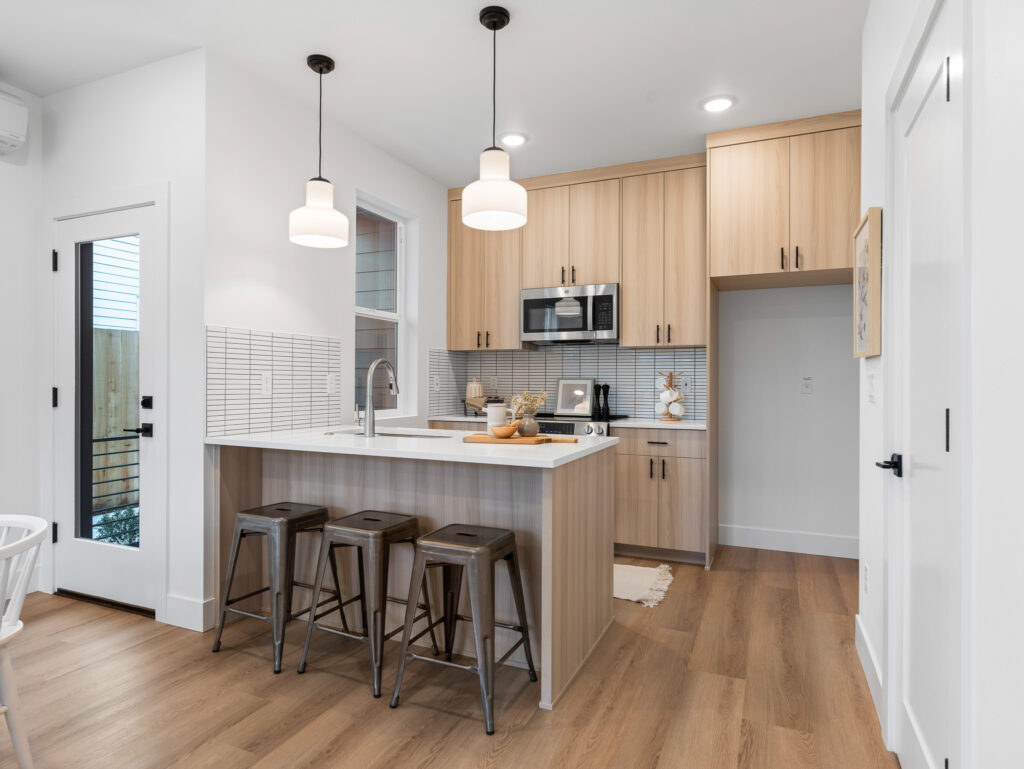
Fewer halls mean more useful square footage. By minimizing transitional areas, Aker reallocates space to where it’s most valued—living rooms, kitchens, and bedrooms. Kitchens open directly into living areas, often anchored by a central island that serves as a cooking station, breakfast bar, and gathering space.
Strategic sightlines amplify the openness. In many Aker layouts, entering the front door offers a full view through to the backyard or outdoor patio, creating a sense of depth and continuity.
Oversized windows are a key component in achieving a small home feel spacious, inviting the outdoors in and creating a seamless connection with nature.
Multi-purpose zones also elevate utility. Built-in workspaces tucked beside dining areas, or laundry rooms that share space with pantries or storage nooks, are common examples. These design efficiencies support the diverse routines of modern households.
Thus, the small home feel spacious is not simply an aesthetic choice but a necessity for enhancing well-being.
Natural Light and Window Placement
Light is one of the most powerful spatial tools in design. Aker homes prioritize natural daylight by integrating oversized windows in key areas such as living rooms, dining spaces, and bedrooms.
In narrow-lot homes, window placement is meticulously planned to avoid dark corners. Transom windows bring in sunlight without sacrificing privacy, and carefully selected glass doors and sidelights amplify brightness at entryways.
Light isn’t just about visibility—it’s emotional. Natural daylight improves mood, boosts productivity, and makes spaces feel cleaner and more open. During Portland’s cloudy seasons, every ounce of natural light counts.
Thoughtful window orientation ensures that homes are not only lit throughout the day but warmed by sunlight during the winter months, reducing heating needs and enhancing comfort.
Vaulted Ceilings & Vertical Volume
Every material selection contributes to a small home feel spacious, allowing for a cohesive and inviting atmosphere.
When building out isn’t possible, building up makes a difference. Vaulted ceilings can take a modest 800-square-foot home and make it feel grand.
In Aker homes, ceiling heights are often increased in main living areas, creating an airy atmosphere. Exposed beams offer subtle texture and architectural interest, while clerestory windows tucked into higher walls bring in light without compromising privacy.
This harmony in design elements directly influences how a small home feel spacious, creating a rich experience for inhabitants.
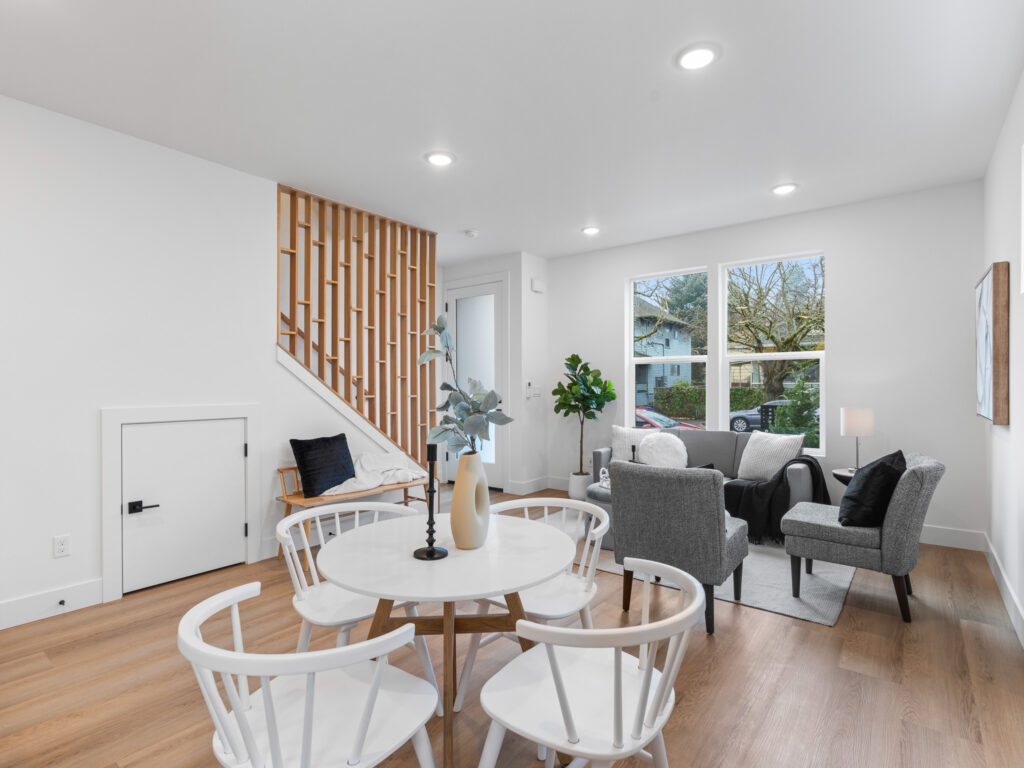
Two-story foyers and open stairwells provide volume in duplexes or townhomes, giving residents the vertical breathing room often missing in compact builds. The sense of expansiveness starts not at eye level, but above it.
In the context of lighting, achieving a small home feel spacious requires strategic layering to enhance the overall ambiance.
Materials That Blend and Flow
Visual cohesion is essential to expanding the feel of an interior. Aker uses a limited, high-quality materials palette to reduce visual noise.
Consistent flooring throughout the main level—often light oak or matte-finished engineered wood—ties rooms together. Kitchen cabinetry mirrors bathroom vanities in tone and finish, while trim details are kept consistent to unify the aesthetic.
Open shelving is frequently employed to reduce bulk and allow walls to “breathe,” while keeping visual clutter in check. Accent materials like matte black hardware or brushed brass are repeated strategically to add depth without chaos.
When colors, textures, and finishes flow harmoniously, the space feels larger, more intentional, and far more luxurious.
Layered Lighting Design
Outdoor connections also play a crucial role in making a small home feel spacious, creating an illusion of extended space.
Artificial lighting often gets overlooked, but in small homes, it can make or break the perceived space.
Aker employs a layered approach, combining ambient, task, and accent lighting. Recessed can lights provide broad illumination without visual intrusion. Pendant lights help define spaces—like kitchen islands or dining nooks—without walls.
Under-cabinet LEDs add dimension and practicality in kitchens. Wall sconces, often used in entryways and stairwells, provide soft pools of light that warm a space without taking up surface area.
Smart lighting controls also offer flexibility—dimming capabilities and programmed schedules let homeowners adapt lighting throughout the day to match activity and mood.
Clever Storage That Disappears
Ultimately, a small home feel spacious is about more than aesthetics; it’s about crafting an environment that supports a fulfilling lifestyle.
In small homes, every inch counts. Aker integrates built-in storage that blends seamlessly into the architecture of the home.
Benches with lift-up tops in mudrooms or dining nooks double as both seating and hidden storage. Full-height cabinetry in kitchens, often extended to the ceiling, maximizes vertical space and reduces dust traps.
Stairwells are optimized with under-stair closets or even built-in shelving. In two-story units, landing zones between bedrooms are converted into linen closets or desk alcoves.
These hidden efficiencies allow homeowners to keep clutter at bay without bulky furniture or unsightly storage bins, preserving the clean aesthetic that helps a space feel larger.
Outdoor Connections
Outdoor living is an extension of indoor comfort—especially in Portland, where a connection to nature is deeply valued.
Aker homes often include sliding glass or French doors that lead directly to porches, decks, or private patios. These doors are more than just functional—they draw the eye outward, extending the perceived space of the room.
In cottage clusters, shared green spaces provide room to breathe and foster a sense of community. These landscaped areas also serve as natural buffers between homes, increasing privacy without isolation.
Covered entries, breezeways, and side yards are designed to be usable—not just transitional. Whether it’s a morning coffee nook or an evening gathering spot, these spaces add square footage in ways that matter.
A Commitment to Smart Design
At the heart of these design choices is a larger philosophy: homes should serve the people who live in them. Spaciousness isn’t just about dimensions—it’s about how space feels and functions.
Aker understands that design decisions—no matter how small—accumulate. Thoughtful layouts, deliberate light planning, durable finishes, and intuitive flow all work together to create an environment that feels good to live in.
This commitment shows up across Aker’s portfolio. Whether it’s the award-nominated cottage clusters featured in the 2025 Street of Dreams or quiet infill builds on the city’s east side, their designs deliver elegance within efficiency.
Conclusion: Small, Smart, and Full of Possibility
Building small doesn’t mean building less. When done right, compact homes can feel just as generous, luxurious, and livable as much larger ones.
Aker Development’s approach to right-sized design helps redefine what’s possible on Portland’s urban lots—without compromising comfort, quality, or style.
Want to see these strategies in action? Explore our project portfolio or contact us to learn more about current and upcoming homes.
External Sources:
- City of Portland Residential Infill Project
- NAHB – The Rise of Right-Sized Homes
- Earth Advantage Certification
Internal Sources:
