

Introduction: Understanding the Portland Housing Market for Investors
The Portland housing market for investors reflects a blend of steady demand, regulatory structure, and long-term urban planning priorities. Unlike faster-moving speculative markets, Portland rewards patience, design awareness, and a strong understanding of local development constraints. Investors who enter without this context often underestimate how deeply policy, geography, and community expectations shape outcomes.
Demand continues to be supported by population growth, limited land availability, and a strong preference for well-designed housing. Buyers are no longer focused solely on square footage—they evaluate energy efficiency, neighborhood livability, and architectural quality. This shift changes how investors must think about value creation.
At the same time, Portland’s planning system introduces complexity. Zoning overlays, environmental protections, and design review processes can significantly affect timelines and feasibility. These conditions create barriers, but they also protect long-term property value by ensuring consistent urban development standards.
Aker has built its approach around these realities. By aligning investment decisions with Portland’s unique structure, they help transform uncertainty into a more predictable development path.
Market Trends and Demand Drivers
The Portland housing market for investors is shaped by evolving lifestyle preferences and demographic shifts. Remote and hybrid work models have permanently altered housing demand, increasing interest in homes with flexible layouts, dedicated workspaces, and multi-use rooms.
Migration patterns also play a key role. Many buyers relocating from higher-cost cities bring expectations shaped by different markets, particularly around design quality and energy efficiency. This creates upward pressure on housing standards, especially in newly developed or renovated properties.
Seasonality still influences activity, with peak buyer engagement typically occurring in spring and summer months. Investors who align project completion with these cycles often experience faster absorption and stronger pricing outcomes.
Another important factor is infrastructure accessibility. Areas with transit connectivity, walkability, and proximity to employment centers consistently outperform less connected neighborhoods. According to broader urban planning research from the U.S. Department of Housing and Urban Development, compact and connected urban development continues to show stronger long-term stability.
Aker incorporates these insights into early-stage planning, ensuring each project aligns with real demand rather than assumptions.
Zoning, Land Use, and Regulatory Environment
One of the defining characteristics of the Portland housing market for investors is its regulatory depth. Zoning codes determine what can be built, but additional overlays often introduce further constraints that impact design, density, and construction timelines.
Environmental protections, historic districts, and design review boards all influence development feasibility. These layers require careful navigation and often extend approval timelines, making early planning essential for financial accuracy.
Lot-specific challenges also play a significant role. Narrow parcels, slope conditions, and utility access can all affect design efficiency. Investors who fail to account for these variables may face unexpected redesign costs or delays during permitting.
Regulatory compliance is managed through agencies such as the Portland Bureau of Development Services, which oversees permitting and construction approvals. Understanding their requirements early in the process significantly reduces friction later.
Aker’s experience in this regulatory environment allows them to anticipate approval challenges and streamline project progression through structured pre-development planning.
Investment Strategies That Perform in Portland
Investment success in Portland is rarely about speed—it is about alignment. The most effective strategies focus on long-term positioning, design quality, and adaptability to market cycles.
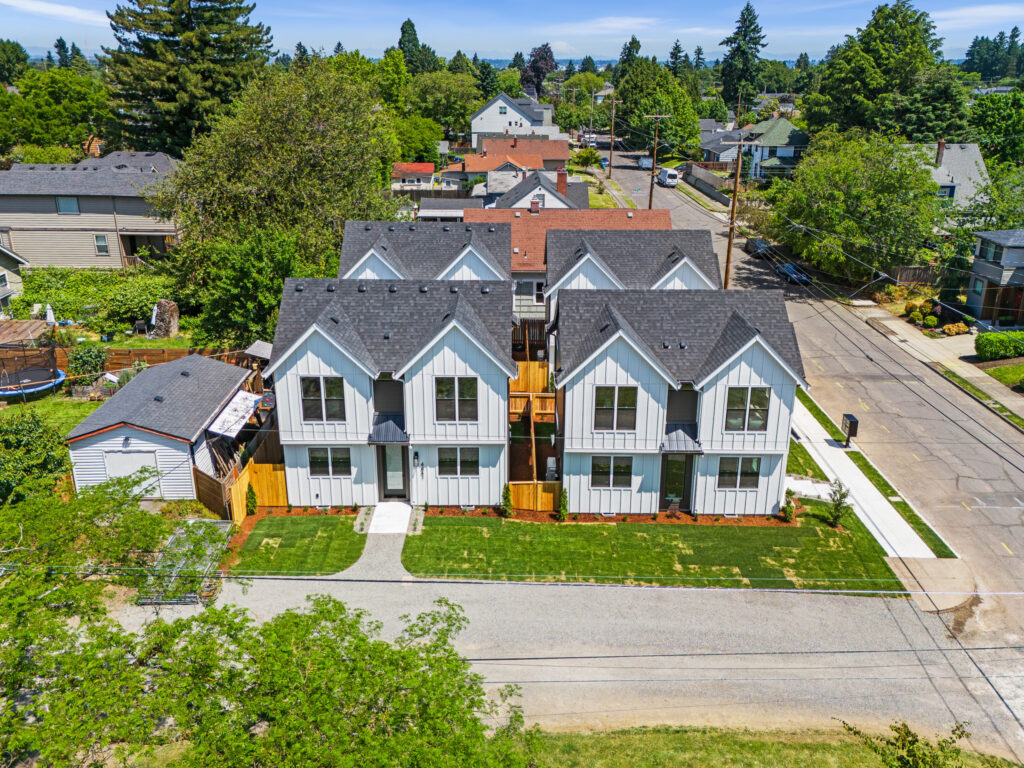
Infill development remains one of the strongest opportunities due to limited available land within established neighborhoods. These projects allow investors to create new housing without expanding urban boundaries, which aligns with both policy direction and buyer demand.
Rental properties also remain stable, particularly in transit-accessible neighborhoods. Units designed for durability, low maintenance, and energy efficiency tend to outperform over time by reducing operational costs and vacancy rates.
Financial modeling plays a crucial role. Investors must evaluate not only acquisition and construction costs but also holding periods, interest rate exposure, and exit timing. According to guidance from the U.S. Environmental Protection Agency, sustainable development strategies can also contribute to long-term asset stability through reduced energy and maintenance costs.
Aker supports investors by aligning design decisions with these financial realities, ensuring projects remain viable under different market conditions.
Risk Factors in the Portland Housing Market
Every real estate market carries a level of uncertainty, and the Portland housing market for investors is no exception. One of the most persistent challenges is timeline variability. Permitting delays, seasonal weather interruptions, and contractor availability can all shift construction schedules in ways that are difficult to predict at the outset. Even well-planned projects may experience adjustments once they enter the approval or build phase, which makes flexibility an essential part of investment planning rather than an afterthought.
Material pricing is another layer of risk that directly affects overall feasibility. Over the past several years, global supply chain disruptions have caused fluctuations in lumber, steel, and finishing materials, creating pressure on pre-established budgets. Investors who rely on static cost assumptions often find themselves exposed when procurement timelines extend or replacement materials increase in cost. This is why modern development strategies now require ongoing cost validation rather than one-time budgeting.
Design misalignment also presents a less obvious but equally important risk. A project can be structurally sound and financially well-backed yet still underperform if it does not align with neighborhood expectations or buyer behavior. In Portland, where architectural character and livability heavily influence purchase decisions, even subtle mismatches in scale, layout, or aesthetic tone can impact absorption rates and final pricing.
Regulatory processes add another layer of complexity. Projects located in environmentally sensitive zones or historically significant districts may require additional review cycles, design revisions, or public feedback sessions. These steps are essential for maintaining city standards, but they can extend timelines and require design adaptability mid-process.
Aker addresses these risks through a structured and experience-driven approach that prioritizes early-stage clarity. Instead of reacting to challenges as they arise, they conduct detailed feasibility assessments before construction begins, identifying potential regulatory constraints, cost volatility factors, and design sensitivities in advance. Their coordination between architecture, engineering, and permitting teams ensures that decisions are aligned from the beginning, significantly reducing downstream disruptions. This proactive model allows Aker to stabilize timelines and improve predictability in a market where uncertainty is often the default condition.
Sustainability and Long-Term Market Direction
Sustainability has evolved from a design preference into a defining expectation in the Portland housing market for investors. Buyers are increasingly prioritizing homes that demonstrate environmental awareness, operational efficiency, and long-term durability. This shift reflects not only cultural values but also practical concerns about energy costs, climate resilience, and resource consumption.
In modern development, sustainability directly influences resale value and competitive positioning. Homes designed with efficient mechanical systems, high-performance insulation, and low-impact materials consistently outperform less efficient counterparts over time. Operational savings become part of the property’s financial value, reinforcing demand among both homeowners and long-term investors.
Water management and environmental responsiveness are also becoming more important as climate patterns evolve. Proper grading, drainage systems, and landscape design now play a significant role in protecting structural integrity and reducing long-term maintenance risk. Passive design strategies—such as natural ventilation, solar orientation, and daylight optimization—further enhance livability while reducing reliance on mechanical systems. According to guidance from the U.S. Environmental Protection Agency, sustainable development strategies can also contribute to long-term asset stability through reduced energy and maintenance costs.
From an investment perspective, sustainability is no longer a secondary consideration—it is embedded in regulatory expectations, buyer decision-making, and long-term asset performance. Properties that fail to incorporate these principles risk becoming less competitive over time, particularly as energy standards continue to tighten across municipalities.
Aker integrates sustainability as a foundational design principle rather than a surface-level feature. Every project considers environmental performance from early planning through material selection and construction methodology. Instead of treating efficiency as an add-on, they embed it into the structural logic of the home. This approach ensures that sustainability is not only compliant with current standards but also resilient to future regulatory and market shifts.
Community Impact and Neighborhood Value
Investment performance in Portland is closely tied to how well a project integrates into its surrounding community. Unlike purely transactional real estate environments, neighborhood perception plays a measurable role in long-term property value. Developments that align with local scale, rhythm, and architectural identity tend to experience stronger acceptance and more stable appreciation.
Design consistency is a critical factor in this process. Homes that acknowledge surrounding rooflines, material palettes, and spatial density patterns tend to blend more naturally into existing neighborhoods. At the same time, successful projects introduce modern improvements without disrupting the visual or cultural continuity of the area.
Community engagement is another essential component of responsible development. Early communication with residents and stakeholders helps address concerns related to construction activity, parking impact, and density adjustments. When these conversations happen proactively, they reduce friction and create a more collaborative development environment.
Over time, community perception becomes part of a property’s value structure. Projects that are seen as thoughtful additions—rather than disruptive changes—are more likely to retain long-term stability in both pricing and desirability. This is particularly important in Portland, where neighborhood identity carries significant weight in housing decisions.
Aker places strong emphasis on contextual development practices. Rather than applying standardized design solutions, they evaluate each site individually, considering its architectural surroundings, street composition, and community expectations. This results in projects that not only meet regulatory requirements but also contribute positively to neighborhood evolution. Their approach reinforces the idea that successful development is not isolated—it is integrated.
The Role of Aker in Portland’s Housing Market
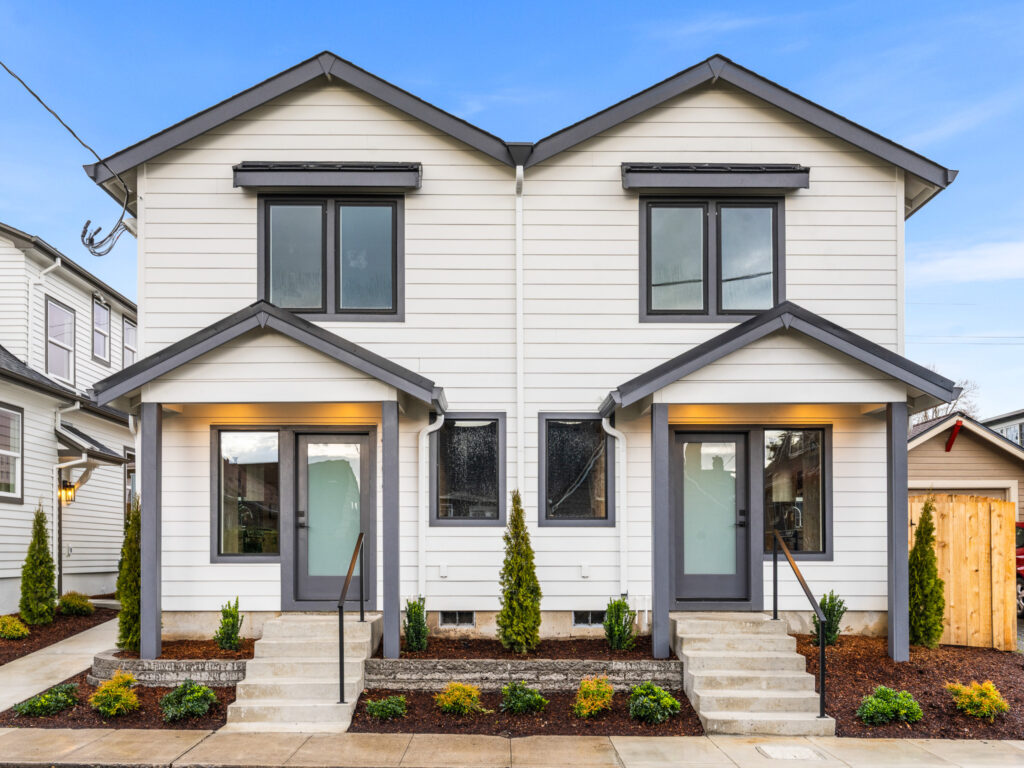
Aker operates within the Portland housing market for investors as both a development partner and a strategic advisor. Their role extends beyond construction execution, encompassing early feasibility analysis, design coordination, regulatory navigation, and long-term planning support. This integrated approach allows investors to move through complex development cycles with greater clarity and reduced uncertainty.
Rather than treating each project as a standalone effort, Aker evaluates how individual developments fit into broader neighborhood and market trends. This long-term perspective helps ensure that properties remain relevant as buyer preferences evolve and as regulatory frameworks continue to shift. It also strengthens decision-making at the earliest stages, where financial outcomes are most heavily influenced.
Aker’s involvement in pre-construction planning is particularly valuable in Portland’s regulatory environment. By aligning design intent with permitting requirements early, they reduce the likelihood of redesign cycles or approval delays. Their coordination between architects, engineers, and municipal review processes creates a smoother transition from concept to construction.
Their value also lies in communication and transparency. Investors working with Aker gain access to structured timelines, realistic cost expectations, and ongoing project visibility. This reduces ambiguity and helps maintain alignment across all phases of development.
Ultimately, Aker functions as a stabilizing force in a market defined by complexity. Their approach bridges the gap between investment strategy and physical execution, ensuring that decisions made on paper translate effectively into built outcomes.
Long-Term Outlook for Investors
The Portland housing market for investors is expected to remain structurally constrained but consistently active over the long term. Limited land availability, combined with sustained population demand, continues to support a stable foundation for housing development. However, this stability comes with regulatory and design expectations that will likely become more refined over time.
Future growth in Portland will be driven primarily by infill development, adaptive reuse projects, and density-optimized housing solutions. As outward expansion becomes increasingly restricted, the focus will shift toward maximizing value within existing urban boundaries. This will place greater emphasis on design efficiency, land utilization, and architectural adaptability.
Technological innovation will also play a growing role in shaping the next phase of development. Advances in building systems, construction methods, and smart home integration will influence how properties are designed and delivered. These improvements will not only enhance efficiency but also reshape buyer expectations regarding functionality and performance.
Investors who adapt to these trends early will be better positioned to navigate market cycles with stability. Those who rely on outdated assumptions about demand or design preferences may find it more difficult to compete in an increasingly sophisticated housing environment.
Aker remains closely aligned with these long-term shifts, continuously refining its approach to match evolving market and regulatory conditions. Their forward-looking perspective ensures that developments remain relevant not only at completion but throughout their lifecycle in the market.
Conclusion: Navigating Portland’s Investment Landscape
Understanding what investors should know about the Portland housing market requires looking beyond surface-level metrics such as pricing or inventory. The real drivers of value lie in how regulation, design quality, sustainability, and neighborhood integration interact over time. Each of these elements contributes to how a property performs not just at sale, but across its entire lifecycle.
Success in this market depends on alignment—between strategy and execution, between design and regulation, and between investment goals and community expectations. Investors who recognize these connections are better equipped to make decisions that produce durable, long-term outcomes rather than short-term gains.
Aker continues to play a central role in this ecosystem by bringing structure, expertise, and consistency to an otherwise complex development environment. Their ability to translate planning into execution provides investors with a clearer path through uncertainty, reducing risk while improving overall project quality.
For those entering or expanding within the Portland housing market for investors, the opportunity is significant—but it requires the right approach. With informed strategy and experienced partnership, investment becomes not just a financial decision, but a long-term contribution to the city’s evolving housing landscape.
External Links
- U.S. Department of Housing and Urban Development
- Portland Bureau of Development Services
- U.S. Environmental Protection Agency
