
Portland lot division development is an important topic for Portland property owners, buyers, and investors because local development is shaped by zoning, infrastructure, design, permitting, and construction realities. Aker Development approaches these topics from both a builder and developer perspective, which helps connect early feasibility with finished homes that are practical, durable, and aligned with the way people actually live in the Pacific Northwest.
For readers who want to see how these ideas translate into real projects, the Aker project portfolio shows a range of Portland-area infill, residential, and multifamily work. This article is designed to be a clear, practical guide rather than a technical code manual. For site-specific questions, owners should also contact Aker Development before making decisions based only on assumptions or general rules.
Table of Contents
- Why this topic matters in Portland
- What owners, buyers, and investors should understand
- How planning affects cost, timeline, and long-term value
- Common mistakes to avoid
- Questions to ask before moving forward
- Frequently asked questions
- External sources
Lot Division Can Unlock Hidden Value
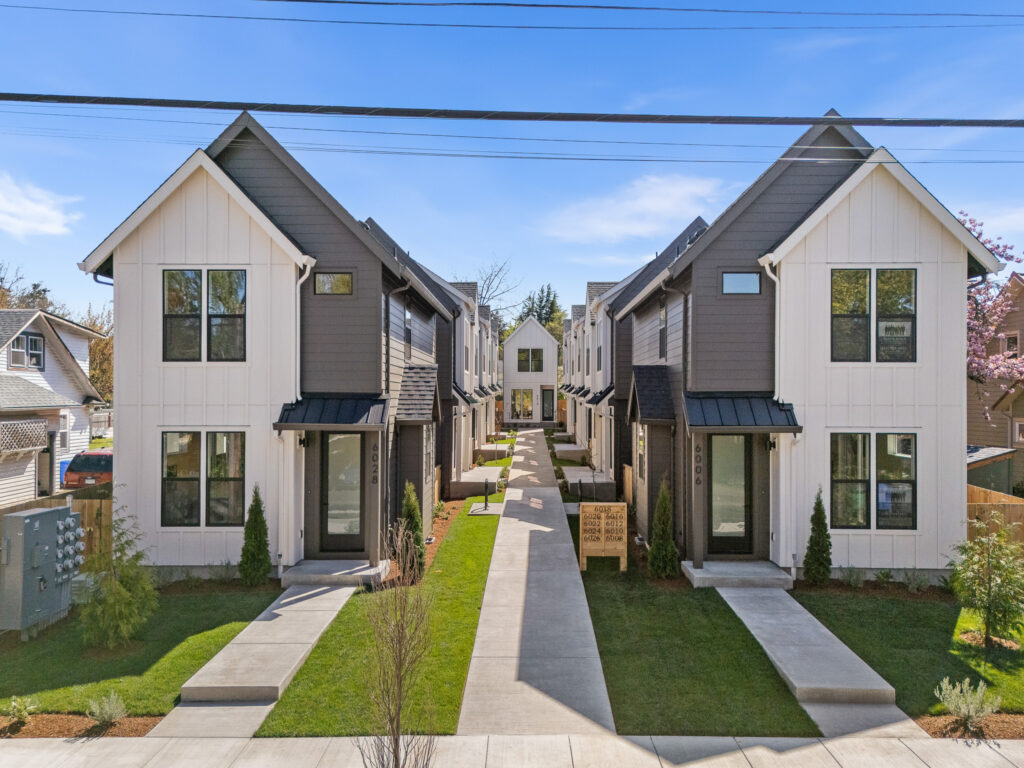
Project photo: Aerial infill context
Many Portland property owners wonder whether their land can support more than one home. A large lot, deep parcel, corner site, or underused property may appear to have redevelopment potential. Residential lot division can be one way to unlock that value, but it is not as simple as drawing a line on a map. A divided property must still work legally, physically, financially, and practically.
Aker Development evaluates lot division opportunities through a development and construction lens. The question is not only whether a division might be allowed. The question is whether the resulting lots can support homes that are buildable, marketable, and livable.
Zoning and Land Use Set the Parameters
The first step is understanding the zoning and land use framework. Lot size, allowed housing types, frontage, access, setbacks, and applicable middle housing rules can all influence whether division makes sense. Local requirements may also affect how new lots relate to utilities, streets, stormwater, and existing structures.
Because these rules can be technical, owners should avoid making assumptions based only on neighboring properties. Two lots on the same block can have different constraints. Aker’s process starts with a careful review of what the property can support under current conditions and what path would be required to move forward.
Access and Utilities Are Critical
A divided lot still needs to function. Each future home may need appropriate access, utility service, drainage, and emergency considerations. A rear lot without practical access may be difficult to develop. A split that creates awkward utility conflicts may become expensive. A lot division that ignores stormwater or grading may create design and permitting issues later.
These details can change the economics of the project. A split that looks profitable on paper may lose appeal once infrastructure costs are understood. Conversely, a site with clean access and utility logic may become a strong opportunity. This is why site evaluation is essential before moving too far into design.
Key Takeaways for Readers
- The strongest projects begin with feasibility, not assumptions.
- Portland lot division development should be connected to design, construction, and market demand.
- Early coordination reduces the risk of delays, redesigns, and avoidable cost surprises.
- Quality execution is what turns a promising site into a lasting asset.
Existing Homes Add Complexity
Many lot division opportunities involve properties with existing homes. That creates additional questions. Should the existing home remain? Can it be remodeled, moved, or incorporated into the plan? Does demolition make more sense? How will construction affect the occupied or neighboring structure? What improvements are required to make the entire site work?
Aker looks at these questions with the end product in mind. The goal is not just to create legal parcels. The goal is to create homes and sites that make sense when completed. That requires thinking through construction sequencing, buyer expectations, and long-term property value.
Owners Should Start With a Feasibility Review
For property owners, the best next step is a feasibility conversation. Before spending heavily on design, owners should understand the likely approval path, site constraints, infrastructure needs, and market opportunity. A responsible developer will help clarify the potential and the limitations.
Lot division can be a powerful tool in Portland, especially as the city looks for ways to add housing within existing neighborhoods. But the best outcomes come from disciplined planning. Aker’s approach is to help owners and investors move from possibility to informed decision-making.
Common Mistakes to Avoid
The most common mistake around Portland lot division development is treating the topic as a single task instead of a connected development decision. Owners may look only at the purchase price of land. Buyers may look only at finished square footage. Investors may look only at projected revenue. But strong Portland projects require all of those pieces to work together. Zoning, utility access, site conditions, design quality, construction sequencing, and market fit are connected. Ignoring one of them can create delays, redesigns, or value loss later.
Another mistake is waiting too long to involve the builder or field team. Infill development can look clean during early design, but the field realities are often where the real constraints appear. Staging, equipment access, inspections, neighboring structures, material delivery, and weather all affect how the project moves. A builder-developer perspective helps close the gap between a good idea and a buildable plan.
Questions to Ask Before Moving Forward
Before making a major decision related to Portland lot division development, owners and investors should slow down and ask better questions. These questions help reveal whether a project is truly ready to move forward or whether more feasibility work is needed.
- What does the site actually allow under current zoning and development standards?
- What infrastructure, utility, drainage, access, or frontage issues could affect cost?
- How does the proposed home or project fit the surrounding neighborhood and buyer demand?
- What decisions must be made before permit drawings are finalized?
- Where are the biggest schedule risks, and how can they be reduced early?
Why This Matters for Long-Term Value
Long-term value is created by more than a successful closing or a strong first impression. It comes from homes that perform well, sites that drain properly, layouts that support daily living, and construction details that hold up over time. In Portland, where climate, code, neighborhood context, and land constraints all interact, long-term value depends on disciplined planning from the beginning.
That is why Portland lot division development deserves serious attention. It is not simply a search term or a single project milestone. It is part of the larger system that determines whether a development feels thoughtful, functions well, and remains desirable after the marketing photos are taken.
How Aker Thinks About This Work
This is also why Aker Development approaches each project with a long-term view. A successful Portland development is not measured only by the day it lists for sale or reaches final inspection. It is measured by whether the home continues to function well for the people who live there, whether the site improves the block, whether the construction details hold up in the Pacific Northwest climate, and whether the project contributes to a stronger housing ecosystem. That level of execution requires early planning, transparent decision-making, and a team that understands both development strategy and field realities.
For Aker Development, Portland lot division development is not just an SEO phrase. It reflects a real part of the work required to build better homes in Portland. The projects that last are the ones planned with discipline, designed with intention, and built with respect for both the site and the people who will eventually live there. View Aker projects.
Readers should also remember that Portland development is highly local. A project that works in one neighborhood may require a different approach only a few blocks away. Lot conditions, access, utilities, market expectations, and neighborhood context all influence the right strategy. That is why experienced local judgment matters. Aker’s work is rooted in the details that make Portland different from a generic housing market.
For homeowners, the practical takeaway is to avoid judging a development opportunity only by what is visible from the street. The deeper questions are usually behind the scenes: how the site drains, how the building is oriented, how approvals will be handled, whether the infrastructure supports the intended use, and whether the final design will still feel comfortable years from now. Those questions are directly tied to Portland lot division development and should be answered early.
For investors and development partners, the strongest opportunities are rarely the ones with the simplest story. They are the projects where the team understands the constraints, prices risk accurately, and turns technical complexity into a better finished product. In that sense, Portland lot division development is part of a larger discipline: protecting the downside while creating a home or community that the market can trust.
For buyers, these details show up as confidence. They may not know every zoning decision, construction sequence, or site planning constraint that shaped the home, but they can feel when a project has been thought through. Rooms feel better, exterior spaces make sense, water is managed correctly, and the home fits the setting. That is the practical result of good development work.
Lot Division Is a Development Strategy, Not Just a Legal Process
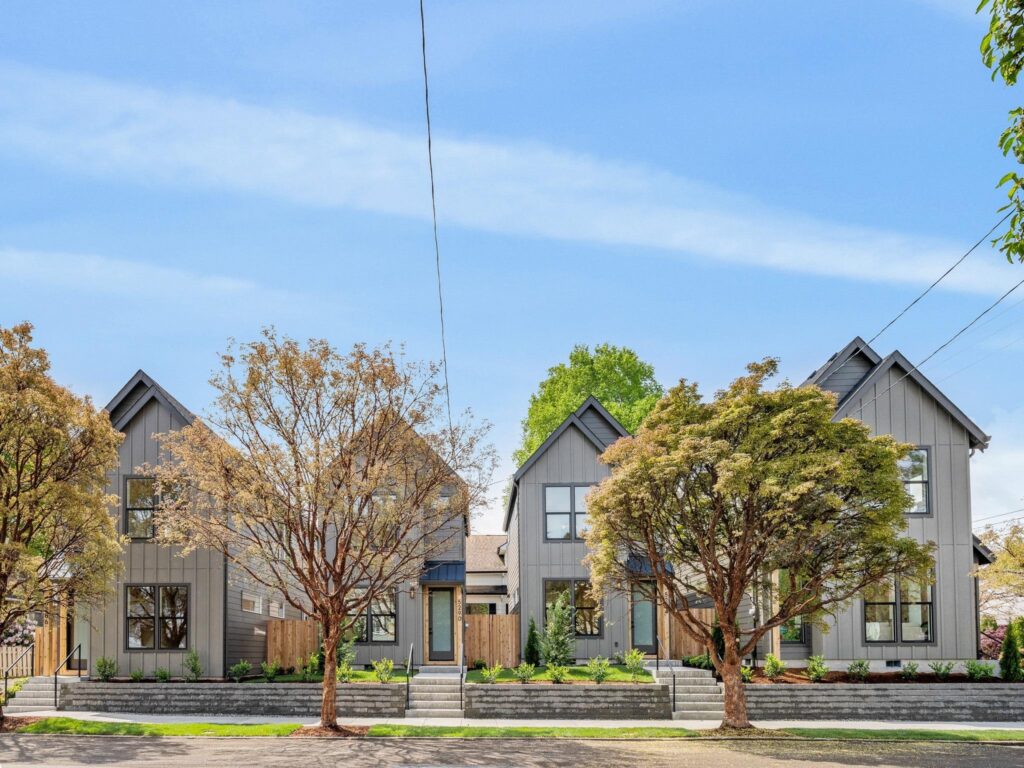
Project photo: Finished residential infill
Portland lot division development is often discussed as paperwork, but the real issue is strategy. A divided lot must still support a home that is marketable, buildable, accessible, and aligned with the surrounding neighborhood. The legal act of dividing land is only valuable if the resulting parcels can support successful housing.
Property owners should understand that lot division can affect setbacks, utilities, frontage, fire access, stormwater, parking, construction staging, and future resale. A parcel that looks logical on a map may create design or infrastructure problems if the split is not coordinated with the eventual building plan.
For this reason, Aker approaches lot division through both development and construction lenses. The goal is to create parcels that work in reality, not just on paper.
How This Connects to Aker’s Work
Aker’s work is rooted in the belief that successful development is not only about adding square footage. It is about creating homes that fit their sites, serve the people who live in them, and make sense within Portland’s evolving housing landscape. Readers can explore more examples in the Aker Development project portfolio, where completed and upcoming projects show how planning, construction, and design come together.
This is especially important for infill projects because the finished home is only the final visible result. Before that point, the project depends on zoning research, site feasibility, design coordination, permitting strategy, trade sequencing, and field execution. Aker’s value comes from understanding how those pieces interact before they become expensive problems.
How to Evaluate This Topic in Real Life
When evaluating Portland lot division development in a real Portland project, the most helpful approach is to move from broad possibility to specific proof. A general idea may sound promising, but development decisions should be grounded in a clear understanding of the site, the applicable rules, the buyer or resident profile, and the cost of actually delivering the work. This is where experienced builder-developers create separation from purely theoretical advice.
The first layer is regulatory. Owners should understand what the current zoning allows, what standards apply, whether any overlays or design considerations exist, and what review path may be required. This does not mean every owner needs to become a zoning expert. It means the early conversation should be grounded in the right questions so the project does not move forward on assumptions that will later be corrected by the permit process.
The second layer is physical. Every lot has a real condition that is different from the way it looks on a map. Slope, trees, frontage, utility locations, existing structures, stormwater, neighboring properties, and construction access all matter. In urban infill, these details are not side issues. They can determine the entire project sequence and can affect whether the economics make sense.
The third layer is market fit. A project should not only be legal and buildable. It should create a home people actually want to live in. That means the layout, light, privacy, parking approach, outdoor space, material choices, and neighborhood connection all deserve attention. A development that ignores the buyer or resident experience may solve the technical problem while missing the human one.
The best projects bring these layers together early. When feasibility, design, permitting, and construction planning are coordinated, the team can make stronger decisions before money and time are committed. That is why a disciplined process matters for Portland residential development and why Aker emphasizes planning before execution.
For practical SEO use, this article is intentionally structured with short paragraphs, clear subheadings, a table of contents, image recommendations, internal links, and external sources. When the post is loaded into WordPress, the final Rank Math score will still depend on the actual URL, featured image, alt text, excerpt, schema settings, and whether the Rank Math Table of Contents block is used in the editor.
This extra publishing discipline matters because SEO performance is not created by article copy alone. The page title, permalink, internal links, image settings, page speed, schema, and on-page formatting all work together. Before publishing, the editor should review the Rank Math sidebar and make small adjustments inside WordPress as needed.
Owner, Buyer, and Investor Takeaways
- Treat Portland lot division development as a strategic topic, not just a search term.
- Review zoning and site conditions early so design decisions are based on reality.
- Think about construction feasibility before committing to a layout or acquisition.
- Use finished project examples to understand how planning choices affect the final product.
- Ask better questions before making decisions about land, design, permits, or investment.
Frequently Asked Questions
How early should owners evaluate development feasibility?
Feasibility should be evaluated before design or purchase decisions become too fixed. Early review helps identify zoning, infrastructure, budget, and construction constraints while there is still time to adjust the plan.
Why does local Portland experience matter?
Portland development is highly site-specific. Neighborhood context, zoning, permitting, utilities, and construction logistics can vary significantly from one property to another.
Can every infill lot support additional housing?
No. Some lots have zoning, infrastructure, access, environmental, or financial constraints that make development difficult or impractical. A feasibility review is the first step.
What is the biggest mistake owners make?
The most common mistake is assuming a lot is valuable for development without understanding the full cost and timeline required to make the project buildable.
What makes Aker different?
Aker works from both a builder and developer perspective, which helps connect land strategy, design, permitting, construction, and long-term value.
Next Step
If you are evaluating land, considering a development opportunity, or comparing new construction options in Portland, contact Aker Development to start a practical conversation. The earlier the right questions are asked, the easier it is to protect budget, timeline, design quality, and long-term value.
