

Urban growth is changing. Cities across the United States are facing increasing pressure to create housing while preserving infrastructure, reducing environmental impact, and supporting long-term economic stability. In Portland, these conversations have become especially important as available land becomes more limited and housing demand continues to rise. This shift has pushed developers, investors, and homeowners to look more closely at infill development as a practical long-term strategy rather than a temporary trend.
Understanding why urban infill offers strong long-term returns requires looking beyond simple property appreciation. Infill development strengthens neighborhoods by making better use of existing infrastructure, increasing housing availability, and supporting more connected communities. Unlike outward suburban expansion, infill projects work within established urban areas, creating opportunities that align with Portland’s long-term planning goals.
The financial advantages of infill development are closely tied to scarcity. Well-located urban land becomes increasingly valuable over time because there is only a limited amount available. Properties located near transit corridors, employment centers, schools, and walkable amenities often retain stronger demand during market fluctuations. These characteristics create a more resilient investment environment compared to developments located farther from urban services.
Aker Development has embraced this philosophy throughout its Portland projects. Their approach focuses on thoughtful urban housing solutions that align with neighborhood character while addressing the city’s evolving housing needs. Rather than treating infill development as a purely transactional process, Aker Development approaches each project as part of a broader long-term urban strategy designed to strengthen both property value and community livability.
The Growing Demand for Urban Housing
Population growth continues reshaping Portland’s housing landscape. More residents are prioritizing convenience, walkability, and access to essential services over large suburban lots that require longer commutes and greater maintenance. This demand shift has increased interest in homes located within established neighborhoods where infrastructure and amenities already exist.
Urban living also appeals to buyers seeking flexibility. Many homeowners now prefer locations that allow them to work remotely while remaining connected to restaurants, transit systems, healthcare services, and recreational spaces. These changing lifestyle patterns have made infill development increasingly attractive because it creates housing within areas already designed to support daily life efficiently.
Another factor influencing urban demand is transportation cost. According to research from the U.S. Environmental Protection Agency, compact development patterns reduce vehicle dependency and improve sustainability outcomes by encouraging more efficient land use and infrastructure utilization. These benefits contribute to the long-term stability of urban housing markets because they align with broader environmental and economic priorities.
Aker Development recognizes that housing demand is no longer driven solely by square footage. Their projects prioritize functionality, energy efficiency, and contextual design that responds to how modern buyers actually live. By focusing on livability rather than excess, they create homes that remain relevant as market preferences continue evolving.
Limited Land Creates Long-Term Value
One of the primary reasons urban infill offers strong long-term returns is land scarcity. Established urban neighborhoods contain limited undeveloped property, which naturally increases the long-term value of strategically located lots. As Portland continues growing, well-positioned infill sites become increasingly difficult to acquire, making existing urban parcels more valuable over time.
Scarcity changes how real estate behaves during market cycles. While broader markets may fluctuate, centrally located properties with strong infrastructure access often maintain higher levels of demand because replacement opportunities are limited. Investors and homeowners alike recognize that urban land within desirable neighborhoods cannot easily be recreated.
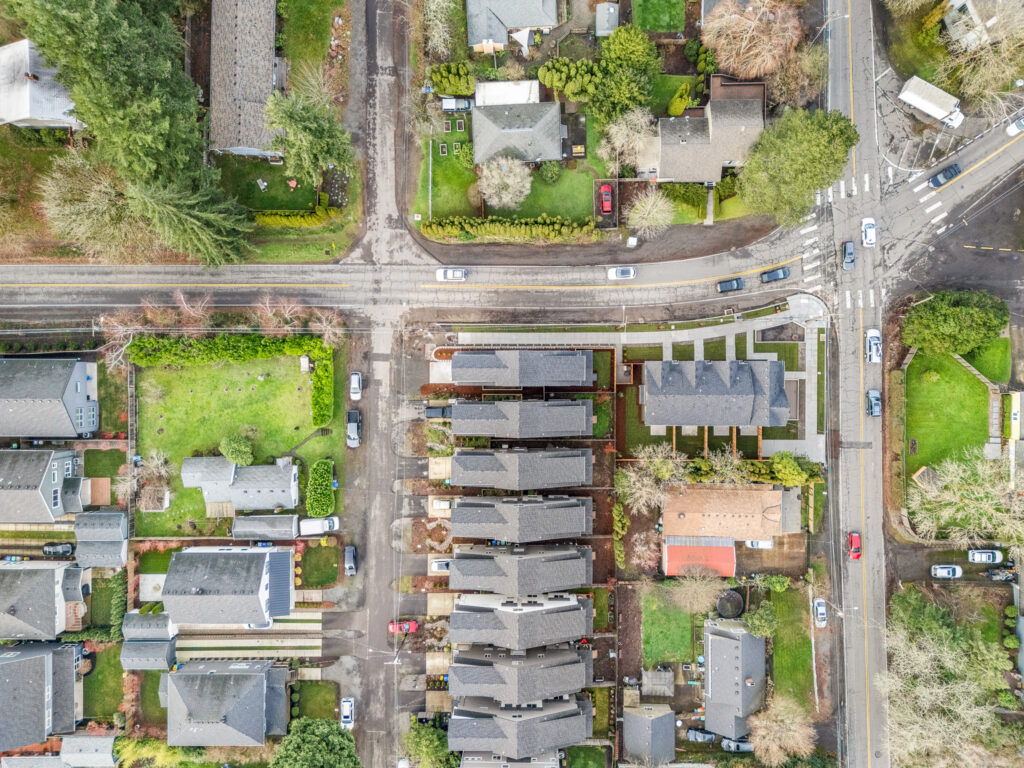
This dynamic also encourages smarter development strategies. Instead of relying on large-scale suburban expansion, developers are challenged to maximize existing land through thoughtful density, efficient design, and adaptable housing solutions. These projects often create stronger long-term appreciation because they respond directly to constrained supply conditions.
Aker Development carefully evaluates infill opportunities based on long-term neighborhood potential rather than short-term speculation. Their planning process considers infrastructure access, community context, zoning conditions, and future livability trends before development begins. This disciplined approach helps ensure projects retain value beyond immediate market conditions.
Infrastructure Efficiency and Urban Stability
Urban infill development benefits from infrastructure that already exists. Roads, sewer systems, utility networks, transit routes, schools, and emergency services are typically established within infill neighborhoods, reducing the need for costly expansion. This efficiency creates both economic and environmental advantages over large-scale suburban growth.
Infrastructure efficiency also improves municipal stability. Cities can maintain services more effectively when growth occurs within existing urban boundaries rather than across sprawling developments that require expensive new systems. This contributes to stronger long-term neighborhood performance because resources are used more efficiently.
For homeowners and investors, infrastructure access directly influences property value. Homes located near transit systems, healthcare facilities, and employment centers tend to maintain stronger demand because they reduce commuting burdens and improve daily convenience. Buyers increasingly prioritize these practical advantages when evaluating long-term housing decisions.
Aker Development integrates infrastructure analysis into every project. Their team evaluates utility capacity, transportation access, drainage systems, and neighborhood connectivity before moving forward with development plans. This attention to foundational systems supports long-term project performance and reduces the likelihood of future infrastructure-related complications.
Sustainability Strengthens Investment Performance
Sustainability has become one of the strongest drivers of long-term real estate value. Buyers increasingly expect homes to operate efficiently, minimize environmental impact, and reduce long-term operating costs. Urban infill naturally supports these goals because it encourages compact development patterns that reduce resource consumption.
Energy-efficient systems, walkable neighborhoods, and reduced vehicle dependency all contribute to stronger sustainability performance. According to the Urban Land Institute, developments located within connected urban environments often demonstrate greater resilience due to lower infrastructure costs and stronger demand stability. These conditions support long-term property appreciation while reducing operational inefficiencies.
Environmental responsibility also influences future regulatory conditions. Cities including Portland continue implementing policies that prioritize density, sustainable construction, and efficient land use. Developments aligned with these priorities are more likely to remain competitive as building standards evolve over time.
Aker Development incorporates sustainability into both planning and construction decisions. Their projects emphasize durable materials, efficient layouts, and responsible site utilization that support long-term livability rather than short-term visual appeal alone. This approach allows their homes to remain adaptable as environmental expectations continue changing.
Infill Development and Neighborhood Revitalization
Infill development can strengthen neighborhoods when executed responsibly. New housing within established areas often supports local businesses, increases pedestrian activity, and encourages reinvestment in surrounding infrastructure. These improvements contribute to stronger economic and social stability over time.
Well-planned infill projects also help preserve neighborhood vitality by increasing housing supply without forcing outward expansion. Instead of consuming undeveloped land at the urban edge, infill projects reinforce existing communities while supporting broader housing goals.
However, neighborhood integration requires thoughtful planning. Projects that ignore scale, architectural context, or community concerns can create resistance and undermine long-term value. Successful infill development balances modern functionality with sensitivity to surrounding character.
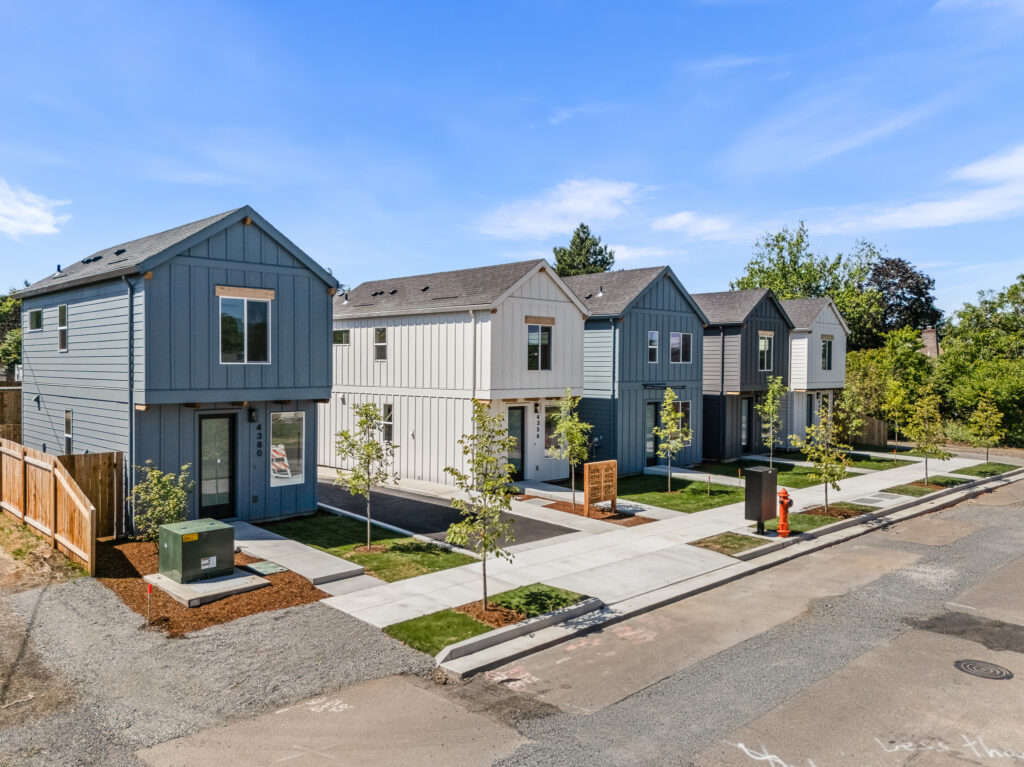
Aker Development approaches neighborhood revitalization through contextual design. Rather than applying identical development models across every site, they adapt projects to reflect existing streetscapes, lot configurations, and community dynamics. This strategy helps developments feel integrated rather than imposed, strengthening long-term neighborhood relationships.
Financial Advantages of Urban Infill Projects
Urban infill development offers multiple financial advantages beyond appreciation alone. Properties within established neighborhoods often experience stronger occupancy rates, more stable resale demand, and reduced vacancy risk due to their desirable locations and infrastructure access.
Another financial benefit is operational efficiency. Compact urban development reduces transportation expenses, utility inefficiencies, and maintenance burdens compared to larger suburban properties. Buyers increasingly recognize these ongoing savings when evaluating long-term housing affordability.
Urban properties also tend to benefit from diversified demand. Young professionals, downsizing homeowners, investors, and multi-generational households may all seek housing within centrally located neighborhoods. This broader buyer pool strengthens market resilience across different economic conditions.
Aker Development aligns financial planning with practical livability considerations. Their projects focus on layouts and features that improve daily functionality while maintaining long-term durability. By balancing design quality with operational efficiency, they help create homes that retain value beyond initial market conditions.
Regulatory Challenges and Strategic Planning
Urban infill development involves regulatory complexity. Zoning overlays, setback requirements, design review processes, and environmental protections all influence how projects move through the approval system. Developers without local expertise often underestimate how these factors affect timelines and budgets.
Portland’s regulatory framework exists to balance growth with neighborhood preservation and environmental responsibility. While these requirements can extend development timelines, they also help maintain long-term urban quality and infrastructure stability. Projects that successfully navigate these systems often emerge stronger because they are better aligned with community expectations.
According to the Portland Bureau of Development Services, careful pre-development planning significantly reduces approval delays and construction complications. Early coordination between design teams, engineers, and permitting agencies improves efficiency and reduces risk exposure during later project phases.
Aker Development’s experience within Portland’s regulatory environment allows them to anticipate challenges before construction begins. Their structured planning process emphasizes coordination, feasibility analysis, and transparent communication, helping projects progress more predictably through complex approval systems.
Market Resilience During Economic Changes
Urban infill properties often demonstrate stronger resilience during economic uncertainty because they are supported by multiple layers of demand. Housing located near transit, employment centers, and established services tends to remain desirable even when broader market conditions fluctuate.
Location stability becomes especially important during changing interest rate environments. Buyers may adjust budgets or housing preferences, but demand for well-connected urban neighborhoods often persists because practical access to daily necessities remains valuable regardless of economic cycles.
Another advantage of infill development is adaptability. Urban properties frequently support multiple uses, including rental opportunities, multi-generational living, or flexible work-from-home layouts. This versatility helps protect long-term value because properties can evolve alongside shifting lifestyle patterns.
Aker Development designs homes with adaptability in mind. Their projects emphasize efficient use of space, durable construction, and layouts that remain functional as household needs change over time. This long-term perspective supports stronger market resilience and broader buyer appeal.
Community Connection and Livability
Long-term real estate value is increasingly tied to livability rather than size alone. Buyers prioritize neighborhoods that support daily convenience, social interaction, and access to essential services. Urban infill contributes to these qualities by strengthening walkable communities and reinforcing existing neighborhood infrastructure.
Community connection also affects emotional investment. Residents who feel connected to their neighborhood are more likely to maintain properties, support local businesses, and contribute positively to long-term community stability. These social dynamics indirectly influence property value by strengthening neighborhood identity and desirability.
Livability extends beyond physical design. Access to parks, schools, public transportation, and healthcare services all shape how neighborhoods perform over time. Infill development located within these established systems often maintains stronger long-term demand because it aligns with practical lifestyle priorities.
Aker Development views livability as a central component of development strategy. Their projects are designed not simply to maximize density, but to create homes that support daily life within the broader neighborhood environment. This focus strengthens both individual property performance and community integration.
The Long-Term Outlook for Urban Infill
Urban infill is likely to remain one of the most important development strategies in cities like Portland. Limited land supply, rising infrastructure costs, and sustainability priorities all support continued demand for compact, efficient housing within established urban areas.
Future housing growth will increasingly depend on maximizing existing land rather than expanding outward indefinitely. This transition will place greater emphasis on design quality, regulatory coordination, and neighborhood-sensitive development approaches.
Technological improvements in construction efficiency, energy systems, and urban planning will also continue shaping infill opportunities. Developers who adapt to these evolving expectations will be better positioned to maintain long-term project performance.
Aker Development continues refining its approach based on these broader market and urban planning trends. Their work reflects an understanding that successful infill development is not simply about building more housing—it is about strengthening neighborhoods while creating durable long-term value.
Conclusion: Why Urban Infill Offers Strong Long-Term Returns
Understanding why urban infill offers strong long-term returns requires looking beyond immediate financial metrics and considering the broader forces shaping modern cities. Land scarcity, infrastructure efficiency, sustainability priorities, and changing lifestyle expectations all contribute to the increasing value of well-executed urban development. These conditions create opportunities for projects that are thoughtfully planned, contextually designed, and aligned with long-term urban needs.
Unlike outward suburban expansion, infill development works within existing communities, reinforcing infrastructure systems and strengthening neighborhood stability. Properties located in established urban areas often benefit from stronger demand resilience because they offer access to transportation, employment, education, and essential services that remain valuable regardless of market fluctuations. This combination of practicality and scarcity creates a more durable investment foundation over time.
Aker Development approaches urban infill with a long-term perspective that prioritizes livability, sustainability, and neighborhood integration. Their work throughout Portland reflects an understanding that successful development requires more than construction expertise alone. By combining thoughtful planning, regulatory knowledge, contextual design, and durable building practices, they help create projects that support both homeowners and the surrounding community.
As Portland continues evolving, urban infill will remain central to how the city grows responsibly. Investors, homeowners, and developers who understand these dynamics will be better positioned to navigate future housing demand while contributing positively to the city’s long-term development goals. With experienced partners like Aker Development guiding the process, urban infill becomes more than a housing strategy—it becomes a lasting investment in the future of the community itself.
